
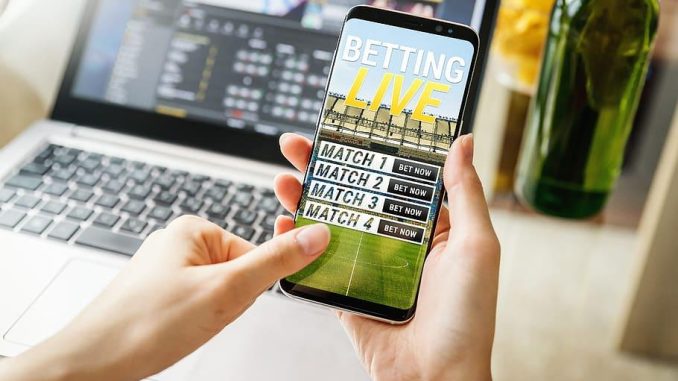
Imagine you’re watching a Monday Night Football game. The star quarterback is
having a rough night, his passes sailing high. The defense is ferocious. You might
think, “Well, his passing yards prop bet is dead…” But what if that very situation
secretly made another bet, in a completely different sport, more likely to hit? This
isn’t magic. It’s the subtle, often-overlooked world of cross-sport correlations in
player prop markets, a powerful edge for the informed bettor.
Most sports speculators live in silos. Football season is for football. Basketball for
basketball. The markets are analyzed in isolation. But sports don’t exist in a
vacuum. They are part of a vast, interconnected entertainment ecosystem. Athlete
performances, team decisions, and even fan sentiment can create ripples that cross
traditional sporting boundaries. The prop hunter who learns to spot these ripples
gains a significant advantage on 22Bet Uganda!
The Psychology of the Overreaction
One of the strongest cross-sport forces is pure human psychology. A monumental
event in one sport can dramatically shift the betting market in another, often in an
exaggerated way.
The “Big Game Hangover” Effect
Consider a city whose team just lost a heartbreaking championship series in Game
The collective mood is somber, deflated. Four days later, that city’s baseball
team takes the field. The stadium might be less full. The energy might be flat.
Could this psychologically impact the home team’s starting pitcher? Possibly.
Could it more tangibly impact a player prop, like the number of strikeouts
recorded by that pitcher? Absolutely. A quiet crowd offers less adrenaline, less
pressure on the opposing batters. The market might not fully price in this
intangible “emotional hangover,” seeing the sports as separate. The sharp bettor,
however, sees the connection.
Similarly, a stunning, highlight-reel performance by a young NBA superstar on a
national broadcast can create a tidal wave of public betting on that player’s points
prop in his very next game. The odds shift, not because of a matchup change, but
because of recency bias and hype. This creates value on the other side. The prop
hunter’s job is to distinguish between a genuine trend and a public overreaction
fueled by cross-sport visibility.
The Structural & Scheduling Links
Beyond psychology, concrete logistical and scheduling factors create direct
correlations. These are harder to spot but offer a more mechanical edge.
The Weather Domino
This is a classic. A severe weather system postpones a Major League Baseball game
in the Northeast. Suddenly, two teams have a doubleheader scheduled for
tomorrow. This has immediate, calculable effects: pitchers are shuffled, bullpens
will be overworked, and position players might sit one of the two games. The prop
hunter immediately scans the relevant markets for those teams. Pitcher strikeout
props? In flux. A reliever’s appearance prop?
More likely in both games. But the cross-sport link might be even more direct.
That same weather system could bring heavy wind and rain to an NFL game in the
same region the following day. The passing props for all quarterbacks in that game
just became far more volatile. One weather event created betting implications
across two sports. The hunter who tracks weather as a cross-sport variable has a
head start.
The Arena & Travel Tango
The scheduling dance of major venues creates another link. Imagine a situation
where an NBA team and an NHL team share an arena. A deep playoff run for the
hockey team leads to a condensed, grueling schedule for the basketball team, with
more back-to-back games and unusual start times due to arena availability.
The fatigue from this scheduling crunch can directly impact player performance
metrics like rebounds, shot attempts, and three-point percentage. The market
listing a “Player X Over 8.5 Rebounds” prop might be using a season-long average.
The hunter knows Player X is on the tail end of a brutal, arena-share-induced road
trip and sees value in the “Under.”
Building Your Cross-Sport Toolkit
Exploiting these correlations requires a shift in mindset and a new set of tools. You
must stop looking solely at statistics and start looking at stories and systems.
First, become a consumer of sports news, not just sports scores. Follow beat
reporters for teams across different leagues in the same city. Is there locker room
drama with the NFL team that’s dominating the local sports radio talk? That
negative energy can spill over. Did the MLS team have an emotionally draining,
physical cup match midweek? Their star forward might have heavier legs on
Saturday.
Second, embrace the calendar. Use a master calendar that overlays the major
events of all sports. All-Star breaks, major golf tournaments, tennis grand slams,
and even the start of college sports seasons. These events shift media attention
and, crucially, where the casual betting public puts its money. When the world is
watching The Masters, there might be less sharp money flowing into NBA player
props, creating softer lines.
Third, think in narratives. Sports media runs on them. The “hot hand,” the
“revenge game,” the “trap game.” These narratives are amplified when they jump
from one sport’s coverage to another. This can inflate a line beyond its rational
value. Your edge is in quantifying the unquantifiable emotional spillover.
Leave a Reply